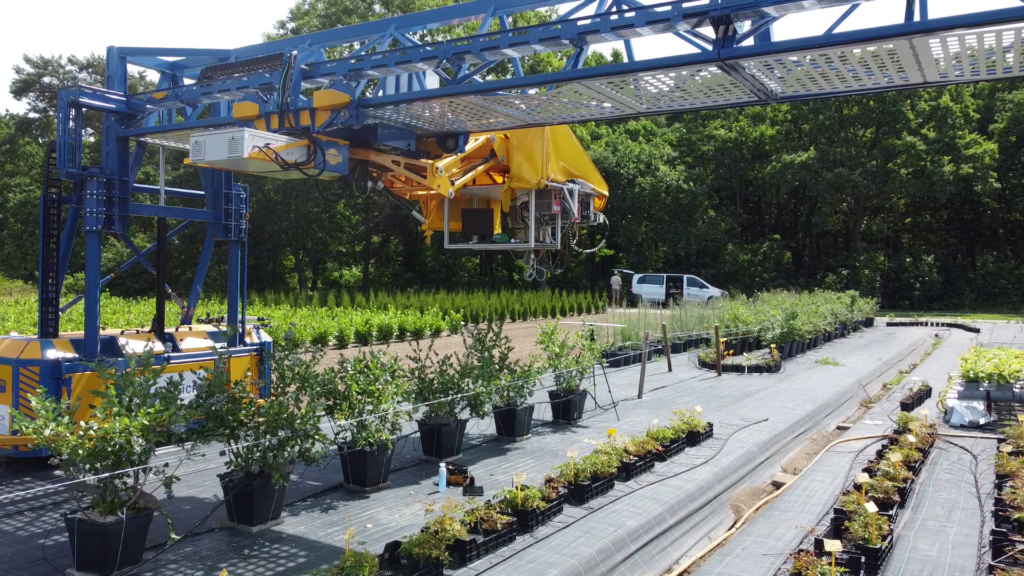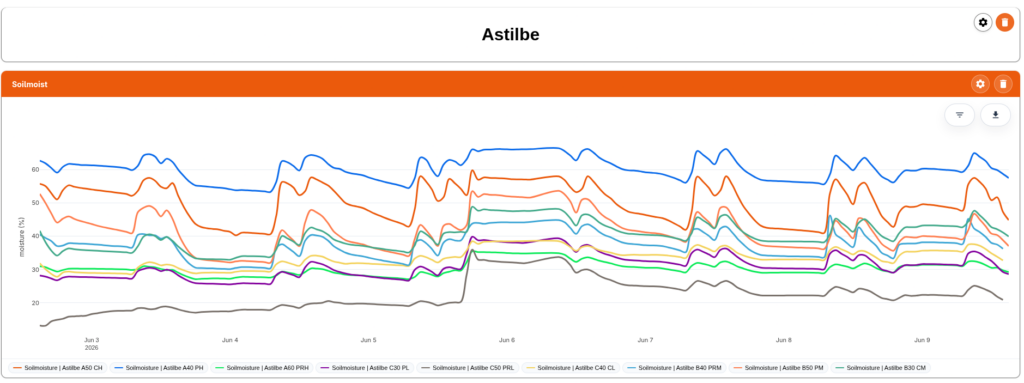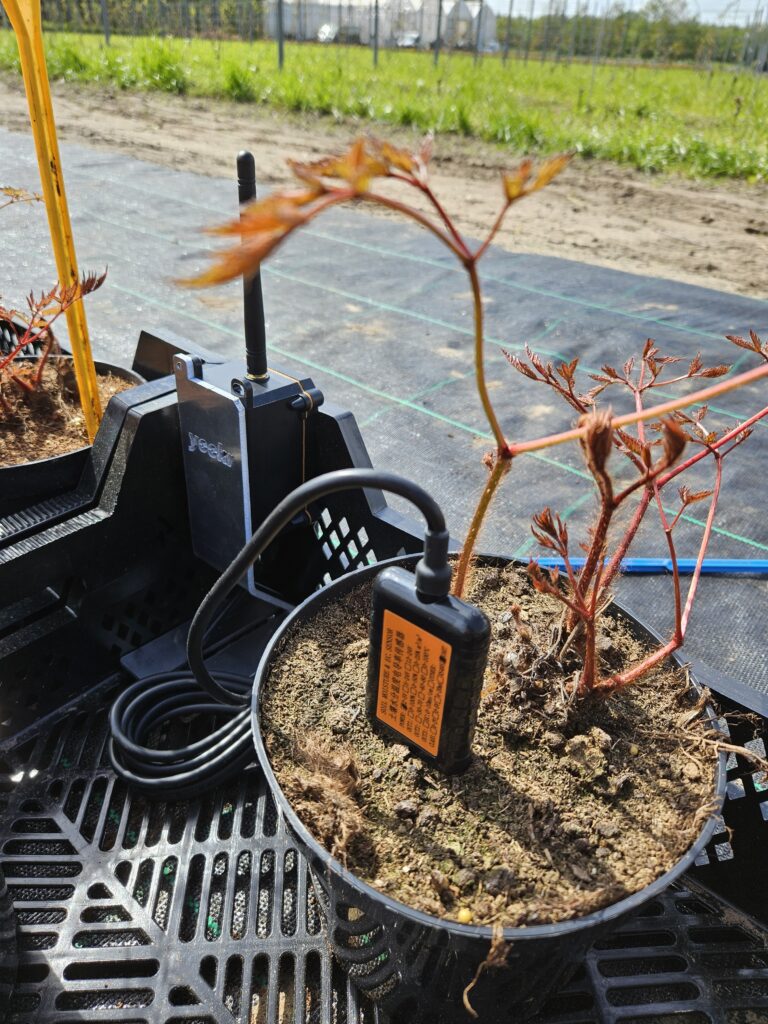

Can growers reduce nutrient losses without compromising plant growth? A two-year trial with Hosta ‘Francee’ at Compas Agro in Venlo explored how substrate and fertiliser choice affected plant growth and nutrient losses in drainage water. The trial compared peat and coir substrates with two fertiliser strategies: a controlled-release mineral fertiliser and an organic fertiliser. Each combination was tested in four plots, with four plants per plot, in both 2025 and 2026.
Similar growth across treatments
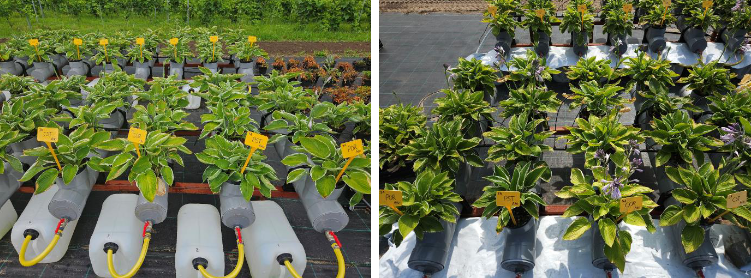
Across both years, the trial found no statistically detectable differences in plant growth, total dry weight or the balance between root and leaf growth. In other words, under the conditions tested, neither substrate nor fertiliser type led to a measurable growth advantage.
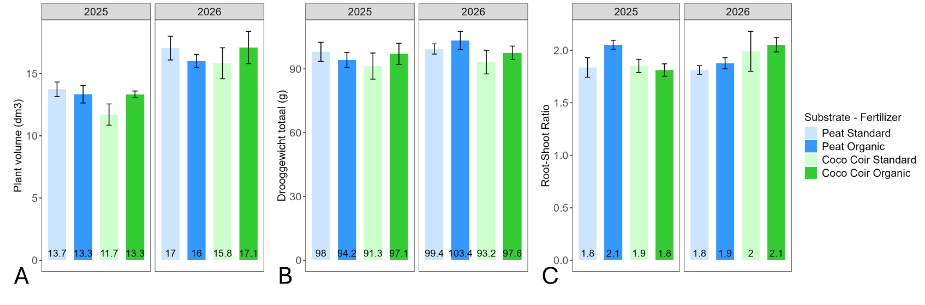
Plants in coir with organic fertiliser did appear more yellow than those in some other treatments:
Nutrient losses varied between years
The drainage results differed between the two growing seasons.
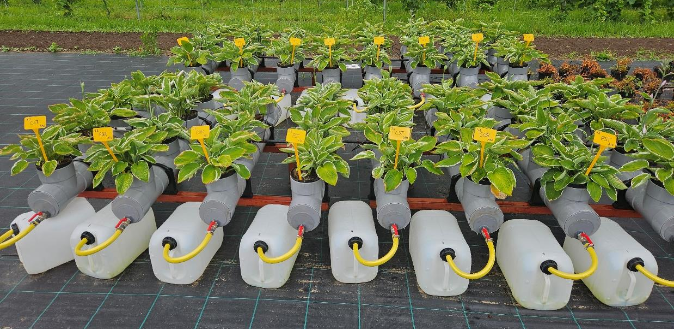
Experimental setup for drain collection. Captures cummulated drain from 4 pots each.
In 2025, plants grown in the peat substrate led to more drainage and greater nitrate losses than those grown in coir substrates. In 2026, substrate had no detectable effect on nitrate losses. Instead, the controlled-release fertiliser treatment had higher nitrate losses than the organic treatment: around 4.0 compared with 2.7 grams per plot. Most of the nitrate loss occurred in the first drainage measurements after the pots were moved outdoors.
The results need to be interpreted with care. Fertiliser application and base fertilisation differed between years, so the year-to-year results cannot be directly compared. The nitrate measurements also provide an indication rather than a precise measure of absolute losses.
What might this mean for growers?
The trial suggests that lower nitrate losses may be possible without a measurable growth penalty, at least in the conditions tested. It also highlights the importance of when and how fertiliser is applied. In 2026, fertiliser had been mixed into the substrate before the plants were moved outdoors. Nutrients that accumulated while there was little drainage may then have washed out during the first drainage events.
Further trials could test how application method, dose and timing affect nutrient losses. This would help clarify whether changes to fertiliser management can reduce leaching while maintaining plant quality.
The work forms part of Irristaud 2.0, which explores practical approaches to more efficient and sustainable horticultural production.